Best Smartphones in India (2026)
Best smartphones from ₹9,499 to ₹77,999 — ranked on performance, display, camera, and battery. 13 picks across budget, mid-range, upper mid-range, and flagship tiers.
Last updated: 8 May 2026
India's smartphone market in 2026 spans four distinct tiers, each with genuine trade-offs. Under ₹10,000 gets you 5G and a full day of battery. ₹10,000–₹15,000 adds AMOLED displays and OIS cameras. ₹15,000–₹25,000 is the sweet spot — flagship-grade chips, 7000mAh+ batteries, and fast charging. And ₹25,000–₹50,000 brings actual flagship processors, the best cameras, wireless charging, and 7-year update commitments.
ProductHunter.in tested smartphones across all four tiers, covering everything from a ₹12,999 Redmi to a ₹47,999 OnePlus. The biggest surprise: the mid-range tier (₹12K–₹15K) has improved dramatically — you now get AMOLED screens and OIS cameras at prices that used to mean LCD-only.
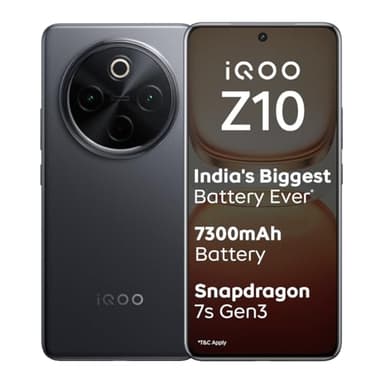
iQOO Z10 5G
Snapdragon 7s Gen 3 (fastest chip under ₹25K), a massive 7300mAh battery that lasts 2 full days, 120Hz AMOLED display, and 50MP OIS camera. The best specs-per-rupee phone in India right now.
Check Price on AmazonLooking for a camera-first phone? See our Best Camera Phones in India. For gaming, see Best Gaming Phones in India.
At a Glance
This article contains affiliate links. We may earn a small commission at no cost to you. Learn more


Samsung Galaxy M06 5G
Best Budget Brand₹9,499

iQOO Z10 Lite 5G
Best Budget Battery₹13,998

Samsung Galaxy M17 5G
Best Mid Updates₹13,998

Moto G57 Power 5G
Best Mid Battery₹16,675
Redmi Note 14 5G
Best Mid Display₹26,999


OnePlus Nord CE5 5G
Best Software₹21,998


Samsung Galaxy S24 5G
Best Compact₹53,799

Budget Picks (Under ₹10,000)
Under ₹10,000 in 2026, you can get a 5G phone with a 120Hz display, 50MP camera, and a full day of battery life. The trade-offs at this price: HD+ resolution (not Full HD), 4–6GB RAM (multitasking can stutter), and average low-light camera performance. But for calling, WhatsApp, social media, and casual gaming, these phones handle everything.
Redmi A4 5G (6GB/128GB)
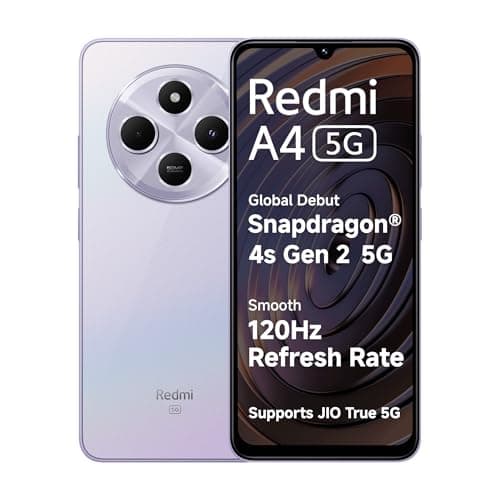
The Redmi A4 5G is the best phone under ₹10,000 in 2026. The Snapdragon 4s Gen 2 made its global debut on this phone — it's more power-efficient than the Dimensity 6300 in competitors, which translates to smoother performance and better battery life. The 6.88-inch 120Hz display is the largest in this tier, making it great for videos and reading. 6GB RAM (vs 4GB on Samsung and iQOO competitors) means smoother multitasking. The 50MP camera handles daylight photography well, though low-light is average. The one catch: 5G works only on Jio, not Airtel. If you're on Airtel 5G, the Samsung Galaxy M06 is a better pick.
Pros
- +Snapdragon 4s Gen 2 — fastest processor under ₹10K
- +6GB RAM — best multitasking in budget tier
- +Largest display at 6.88 inches with 120Hz
- +5,160mAh battery lasts a full day easily
- +128GB storage — no need for expandable storage
- +₹12,999 (down from ₹11,999) — excellent value
Cons
- -5G works only on Jio — no Airtel 5G support
- -HD+ resolution, not Full HD — noticeable on the large screen
- -Some users report occasional lag with heavy apps
- -18W charging is slow — takes 2+ hours for a full charge
Score Breakdown
The best phone under ₹10,000 if you're on Jio. Fastest processor, most RAM, and largest display in this tier. Skip it only if you need Airtel 5G.
Samsung Galaxy M06 5G (4GB/128GB)
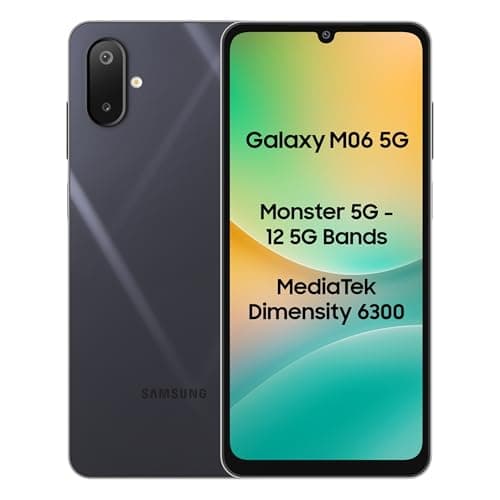
The Samsung Galaxy M06 5G is for buyers who want Samsung's ecosystem and service network at the lowest possible price. The standout feature is Samsung's commitment to 4 OS updates and years of security patches — no other brand under ₹10,000 offers this. Knox security is genuinely useful for protecting personal data. The 25W fast charging is the quickest in this tier (Redmi offers only 18W). Samsung's service network covers every major city and most tier-2 towns in India. The trade-off: only 4GB RAM means multitasking stutters with more than 3-4 apps, and the Dimensity 6300 is noticeably slower than the Redmi's Snapdragon 4s Gen 2.
Pros
- +4 OS updates — longest software support under ₹10K
- +Samsung Knox security for data protection
- +25W fast charging — fastest in budget tier
- +Samsung's massive service network across India
- +128GB storage at this price
- +Solid build quality by Samsung standards
Cons
- -Only 4GB RAM — multitasking stutters noticeably
- -Dimensity 6300 slower than Snapdragon 4s Gen 2
- -HD+ display — no 120Hz refresh rate
- -Mixed recent user reviews about lag issues
Score Breakdown
Buy this if brand trust, long-term updates, and service network matter more than raw performance. Samsung's 4-year update promise makes this phone last longer than any competitor.
iQOO Z10 Lite 5G (4GB/64GB)
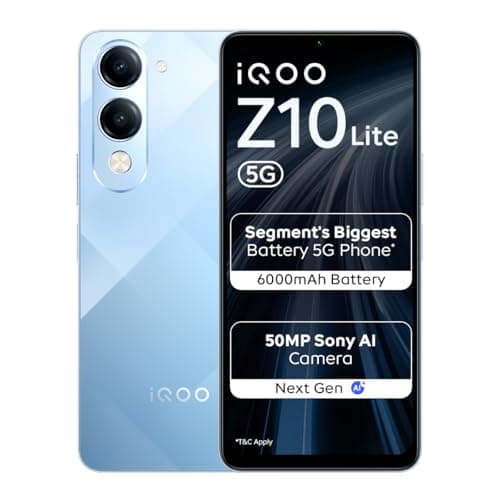
The iQOO Z10 Lite has one killer feature: a 6,000mAh battery that genuinely lasts 2 full days of moderate use. If you're a student, traveller, or anyone who can't always find a charger, this battery endurance is unmatched under ₹10,000. iQOO's build quality is also a step above typical budget phones — it feels more premium in hand. The trade-offs are significant though: only 64GB storage (fills up fast with photos and WhatsApp media), 4GB RAM limits multitasking, and the 15W charging is painfully slow — a full charge takes over 2.5 hours. This is a phone for people who prioritise battery above everything else.
Pros
- +6,000mAh battery — genuine 2-day battery life
- +iQOO build quality — feels premium for the price
- +Dimensity 6300 handles daily tasks well
- +50MP camera for decent daylight photos
- +June 2025 launch — newest phone in budget tier
- +90Hz display for smoother scrolling vs 60Hz
Cons
- -Only 64GB storage — runs out quickly
- -15W charging is extremely slow (2.5+ hours)
- -4GB RAM limits multitasking
- -HD+ display — not as sharp as 120Hz competition
- -90Hz refresh rate, not 120Hz like Redmi A4
Score Breakdown
The battery champion under ₹10,000. Get this if you need 2-day battery life and can live with 64GB storage and slow charging. Not for power users or heavy multitaskers.
Mid-Range Picks (₹10,000–₹15,000)
This tier has transformed in 2026. You now get AMOLED displays, OIS cameras, and 7000mAh batteries — features that used to start at ₹15,000+. The key decision here is what matters most: Samsung's unmatched update commitment (6 years), Motorola's massive battery with clean Android, or Redmi's brightest-in-class AMOLED display.
Samsung Galaxy M17 5G (6GB/128GB)
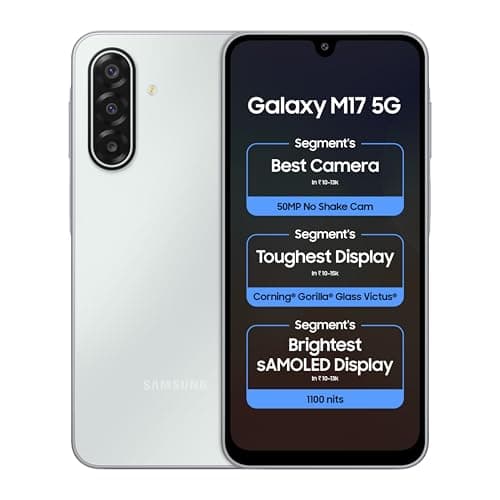
The Samsung Galaxy M17 5G offers something no other phone under ₹15,000 can match: 6 generations of OS updates and 6 years of security patches. Buy this in 2026 and you'll still be getting software updates in 2032. The 50MP OIS camera is a genuine advantage — optical stabilisation eliminates hand-shake blur that plagues budget phones, especially in low light. The Super AMOLED display is vivid with deep blacks, though the 90Hz refresh rate feels slightly less smooth than the 120Hz on competitors. Gorilla Glass Victus and IP54 rating add real durability. The Exynos 1330 is adequate for daily use but noticeably slower than the Snapdragon chips in the Moto and Redmi — gaming stutters on heavier titles. The 5,000mAh battery and 25W charging are the weakest specs here.
Pros
- +6 OS updates + 6 years security — longest support in any price range
- +50MP OIS camera — only phone with optical stabilisation under ₹13K
- +Super AMOLED display with deep blacks and vibrant colours
- +Gorilla Glass Victus + IP54 — serious durability
- +Samsung's nationwide service network
- +₹12,499 — cheapest phone in this tier
Cons
- -Exynos 1330 slower than Snapdragon 6s Gen 4 and Dimensity 7025
- -90Hz refresh rate — not as smooth as 120Hz competitors
- -25W charging is the slowest in mid-range tier
- -5,000mAh battery — smallest in this tier
- -No charger included in box
Score Breakdown
The phone you buy if you plan to keep it for 4+ years. Samsung's 6-year update promise and OIS camera at ₹13,998 make it the best long-term investment in this tier.
Moto G57 Power 5G (8GB/128GB)
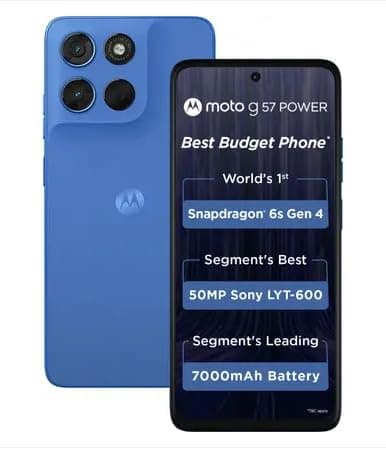
The Moto G57 Power 5G dominates this tier on two fronts: the Snapdragon 6s Gen 4 (the newest 4nm chip in this price range) and a 7,000mAh battery that comfortably lasts 2 full days. The processor handles daily tasks, social media, and moderate gaming without breaking a sweat — it's noticeably snappier than the Exynos in the Samsung M17. The 50MP Sony LYT-600 sensor captures good detail in daylight, and the 8MP ultrawide adds versatility most competitors lack. The 8GB RAM means you can switch between apps without reloading. Clean stock Android 16 with zero bloatware is a breath of fresh air after Xiaomi and Samsung's ad-laden skins. The trade-off: it's an LCD, not AMOLED. Colours are less punchy and blacks aren't as deep. If display quality matters most, the Redmi Note 14 is better.
Pros
- +7,000mAh battery — genuine 2-day endurance
- +Snapdragon 6s Gen 4 — newest, fastest chip in mid-range tier
- +Clean stock Android 16 — zero bloatware, no ads
- +50MP Sony LYT-600 sensor + 8MP ultrawide for versatility
- +8GB RAM — best multitasking in this tier
- +IP64 water and dust resistance
Cons
- -LCD display, not AMOLED — less vivid colours, no true blacks
- -33W charging is slower than Redmi's 45W
- -No OIS on camera — hand-shake blur in low light
- -Motorola's service network smaller than Samsung's
- -Vegan leather design divisive — some find it cheap
Score Breakdown
The best mid-range phone for people who hate charging their phone. 7,000mAh battery, clean Android, and the fastest chip in this tier. Accept the LCD screen for everything else being excellent.
Redmi Note 14 5G (6GB/128GB)
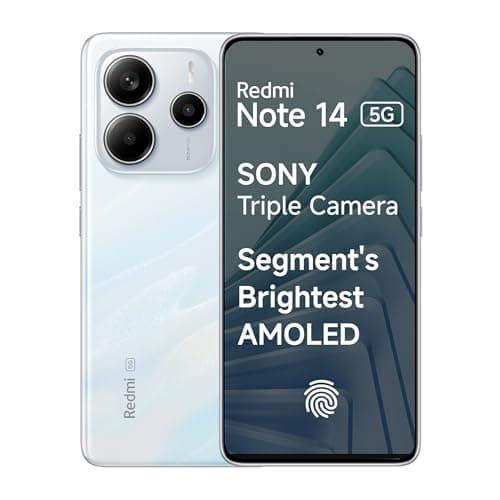
The Redmi Note 14 5G has the best display you can buy under ₹15,000 — a 6.67-inch AMOLED panel that hits 2,100 nits peak brightness, making it perfectly readable even under direct sunlight. At this price, that's extraordinary. The 50MP Sony LYT 600 sensor with both OIS and EIS is the best camera hardware in this tier — you get sharp, stabilised shots that competitors can't match. 45W fast charging fills up in about 50 minutes, which is the fastest here. The Dimensity 7025 Ultra handles daily use and moderate gaming well. The compromise: HyperOS (Xiaomi's skin) comes loaded with bloatware and occasional ads — you'll spend the first 30 minutes disabling pre-installed apps. The 5,110mAh battery is adequate but nowhere near the Moto's 7,000mAh.
Pros
- +2,100 nits AMOLED — brightest display in any phone under ₹15K
- +50MP Sony LYT 600 with OIS + EIS — best camera in mid-range
- +45W fast charging — full charge in ~50 minutes
- +Corning Gorilla Glass 5 protection
- +120Hz AMOLED for smooth scrolling
- +IP64 water and dust resistance
Cons
- -HyperOS loaded with bloatware and ads
- -5,110mAh battery — lasts one day, not two
- -Aggressive background app killing by MIUI
- -Some heating reported during extended gaming
- -6GB RAM — 8GB would have been better at ₹15K
Score Breakdown
The display and camera champion under ₹15,000. 2,100 nits AMOLED and Sony OIS camera are unmatched. Tolerate the HyperOS bloatware and you get a mini-flagship experience.
Upper Mid-Range Picks (₹15,000–₹25,000)
This is where smartphones get genuinely good. You jump to AMOLED displays with Full HD+ resolution, 7000mAh+ batteries, 45–80W fast charging, and processors that handle gaming without stuttering. IP67/68 water resistance enters the picture. Software support extends to 3-4 years of OS updates. If you want a phone that performs like a flagship but costs under ₹25K, this tier delivers.
iQOO Z10 5G (8GB/256GB)
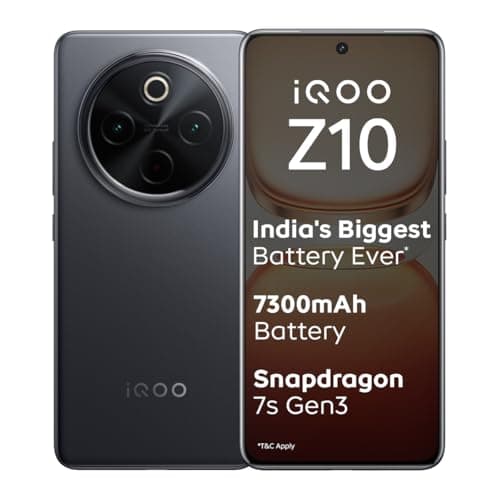
The iQOO Z10 5G dominates this roundup on two specs that matter most: the Snapdragon 7s Gen 3 (the fastest chip under ₹25,000) and a 7,300mAh battery (the largest in this entire roundup). That battery genuinely lasts 2 full days — charge Sunday night, make it through Tuesday. The Snapdragon 7s Gen 3 handles BGMI and Genshin Impact at medium-high settings without thermal throttling. The 120Hz AMOLED display is vivid, and the 50MP OIS camera takes sharp daylight photos. Extended RAM pushes the 8GB to a virtual 16GB for better multitasking. At ₹24,998 (down from ₹25,999), it's the best spec-to-price ratio in this roundup. The compromises: Funtouch OS has bloatware, camera software isn't as refined as Samsung's, and there's no IP rating.
Pros
- +Snapdragon 7s Gen 3 — fastest processor under ₹25K
- +7,300mAh battery — genuine 2-day battery life
- +AMOLED 120Hz display with vivid colours
- +50MP OIS camera for sharp, stabilised photos
- +Extended RAM up to 16GB for heavy multitasking
- +₹21,999 (down from ₹25,999) — aggressive pricing
Cons
- -Funtouch OS has bloatware and occasional ads
- -Camera software lags behind Samsung and Redmi
- -No IP water resistance rating
- -iQOO service centres limited in tier-2/3 cities
- -44W charging is slowest in this tier
Score Breakdown
The best phone under ₹25,000. Fastest processor, biggest battery, and aggressive pricing. Accept the Funtouch bloatware and you get near-flagship performance for mid-range money.
Samsung Galaxy M56 5G (8GB/256GB)
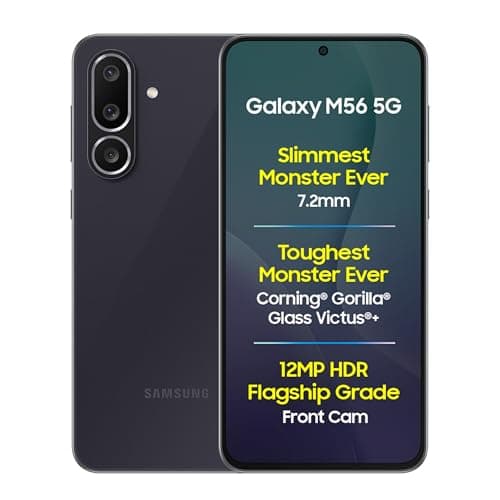
The Samsung Galaxy M56 5G is the most premium phone in this tier. IP67 water resistance (survives 30 minutes in 1 meter of water) is rare under ₹25,000 — only this and the Redmi Note 14 Pro offer it. The Super AMOLED+ display is the best screen here: brightest outdoors, most accurate colours, smoothest scrolling. Samsung's 4-year OS update promise means you'll run Android 18 on this phone. The 45W charging fills up in under 60 minutes. Samsung's service network is unmatched in India — repairs are easy even in tier-3 cities. The compromises: the Exynos 1480 is slightly slower than the Snapdragon 7s Gen 3 in the iQOO, the 5,000mAh battery is the smallest in this tier, and at ₹21,998 it's the most expensive phone on this list.
Pros
- +IP67 water resistance — rare under ₹25K
- +Super AMOLED+ — best display in this tier
- +4 years OS updates + 5 years security patches
- +Samsung's nationwide service network
- +45W fast charging in under 60 minutes
- +Premium glass build with slim profile
Cons
- -Exynos 1480 slightly behind Snapdragon 7s Gen 3
- -5,000mAh battery — smallest in this tier
- -Most expensive at ₹21,998
- -Bloatware pre-installed in One UI
- -No 3.5mm headphone jack
Score Breakdown
The right phone if you want Samsung's ecosystem: best display, IP67, 4 years of updates, and nationwide service. Pay the premium over the iQOO Z10 for build quality and peace of mind.
OnePlus Nord CE5 5G (8GB/256GB)
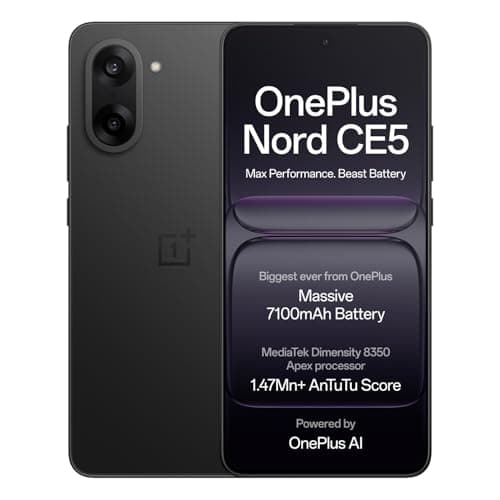
The OnePlus Nord CE5 5G is for people who care about software quality above all else. OxygenOS 14 is the cleanest near-stock Android experience in this segment — no bloatware, no ads, no unnecessary pre-installed apps. The 67W SUPERVOOC charging is the fastest here: 0 to 100% in under 50 minutes. The 7,100mAh battery is the second-largest (after iQOO's 7,300mAh). The alert slider — a beloved OnePlus exclusive — lets you switch between silent, vibrate, and ring without unlocking the phone. The Dimensity 7400 is slightly behind the Snapdragon 7s Gen 3 in benchmarks but handles daily use and moderate gaming without issues. The camera hardware is average for this price — Samsung and Redmi take better photos.
Pros
- +OxygenOS 14 — cleanest, bloatware-free software
- +67W SUPERVOOC — fastest charging in this tier
- +7,100mAh battery for 1.5-2 day endurance
- +Alert slider — switch profiles without unlocking
- +AMOLED 120Hz display with good outdoor visibility
- +Smooth software updates directly from OnePlus
Cons
- -Dimensity 7400 slightly behind Snapdragon 7s Gen 3
- -Camera lags behind Samsung and Redmi in this tier
- -No IP water resistance rating
- -OnePlus service centres reduced in tier-2/3 cities
- -AMOLED slightly dimmer than Samsung outdoors
Score Breakdown
The best phone for software purists. OxygenOS 14's clean experience, 67W charging, and the alert slider make daily use genuinely pleasant. Accept the slightly weaker camera for the best UI in this price range.
Flagship Picks (₹25,000–₹50,000)
The flagship tier is a different league entirely. You get the same Snapdragon 8-series chips found in ₹80,000+ phones, cameras that rival dedicated compacts, wireless charging, IP68 waterproofing, and 7-year update commitments from Google and Samsung. The question isn't whether these phones are good — it's which flagship philosophy you prefer: raw power (OnePlus), camera intelligence (Pixel), compact all-rounder (Samsung), or best value (OnePlus 13R).
OnePlus 13R (12GB/256GB)

The OnePlus 13R is the smartest flagship buy under ₹50,000. The Snapdragon 8 Gen 3 is a proven powerhouse — it's the same chip that powered ₹70,000+ phones last year, and it still crushes every benchmark and game you throw at it. The 1.5K ProXDR display is bright, smooth (120Hz LTPO adapts refresh rate to save battery), and accurate enough for photo editing. The 50MP + 50MP telephoto camera setup delivers sharp photos with natural colours, and the 2x optical zoom is genuinely useful for portraits. The 6,000mAh battery with 80W charging means you never worry about power — a 20-minute charge gets you through a full day. OxygenOS 15 is clean and snappy. At ₹39,999, it undercuts every competitor by ₹3,000–₹12,000 while matching them on daily performance.
Pros
- +Snapdragon 8 Gen 3 — proven flagship chip at lowest price
- +80W SUPERVOOC charges to 100% in 40 minutes
- +1.5K ProXDR LTPO display — sharp and power-efficient
- +50MP telephoto for real optical zoom
- +6,000mAh battery lasts a full day with heavy use
- +₹37,999 — cheapest flagship in this roundup by far
Cons
- -No wireless charging
- -Camera good but behind Pixel in low light and processing
- -Slightly heavy at 207g
- -Only 3 years OS updates (vs 7 for Pixel/Samsung)
- -Heats slightly during sustained BGMI sessions
Score Breakdown
The best flagship for people who hate overpaying. Snapdragon 8 Gen 3, OxygenOS, and 80W charging at ₹39,999 — you'd pay ₹55,000+ for this package a year ago.
Samsung Galaxy S24 5G (8GB/128GB)
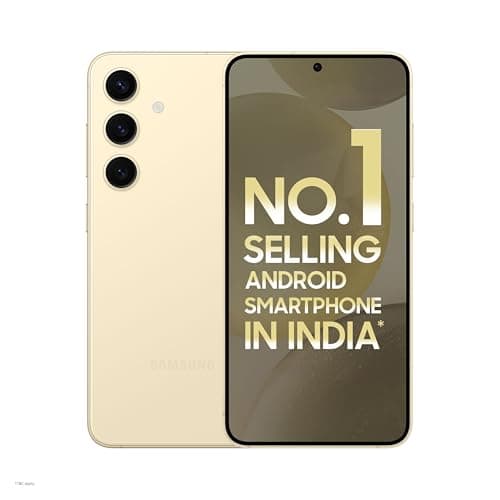
The Samsung Galaxy S24 is the only compact flagship worth buying in India. The 6.2-inch screen is perfect for one-handed use — a rarity when every phone is 6.7 inches or larger. Galaxy AI features like Circle to Search (circle anything on screen to search it) and Live Translate (real-time call translation) are genuinely useful, not gimmicks. The 3x telephoto zoom is the most versatile camera system here — you get wide, ultrawide, and proper optical zoom. The Dynamic AMOLED 2X display is the best panel in any phone under ₹50,000: brightest, most accurate, and smoothest. Samsung's 7-year update commitment and IP68 waterproofing make this phone future-proof. The compromises: the Exynos 2400 heats during gaming, the 4,000mAh battery barely lasts a full day of heavy use, and 25W charging feels painfully slow in 2026. This is a phone for people who value polish over raw specs.
Pros
- +6.2-inch compact size — best for one-handed use
- +Galaxy AI — Circle to Search, Live Translate actually useful
- +3x telephoto zoom — most versatile camera system here
- +Dynamic AMOLED 2X — best display in this entire roundup
- +7 years of OS + security updates
- +IP68 + wireless charging + reverse wireless charging
Cons
- -4,000mAh battery — needs an evening charge with heavy use
- -25W charging — slowest flagship by far
- -Exynos 2400 heats during extended gaming
- -Only 128GB storage with no expansion
- -₹39,999 still has last-gen Exynos (not Snapdragon)
Score Breakdown
The flagship for people who want a complete, compact phone. Galaxy AI, 3x zoom, IP68, wireless charging, and 7 years of updates. Accept the mediocre battery life for everything else being excellent.
Google Pixel 9a (8GB/128GB)

The Google Pixel 9a takes the best photos of any phone under ₹50,000 — and it's not close. Google's computational photography turns the 48MP sensor into something that outperforms phones with technically better hardware. Night Sight in low light, Magic Eraser for removing unwanted objects, and Best Take (combines multiple shots to get everyone smiling) are features you'll use daily. The Tensor G4 chip is purpose-built for AI processing — on-device features like real-time transcription and smart replies work faster than on any Snapdragon phone. Pure Android means zero bloatware, and Google's 7-year update commitment matches Samsung's. The 5,100mAh battery with wireless charging is solid. The trade-off: the Tensor G4 runs hotter and is measurably slower than the Snapdragon 8 Gen 3 for gaming and sustained heavy tasks. This is a camera-and-software phone, not a performance phone.
Pros
- +Best camera in any phone under ₹50K — especially low-light
- +Pure Android — zero bloatware, fastest updates directly from Google
- +7 years guaranteed OS + security updates
- +Magic Eraser, Night Sight, Best Take — AI features that work
- +5,100mAh battery + wireless charging
- +On-device AI for transcription, smart replies, call screening
Cons
- -Tensor G4 slower than Snapdragon 8 Gen 3 for gaming
- -Heats during 4K video recording and sustained tasks
- -Only 18W wired charging — extremely slow in 2026
- -Only 128GB storage with no expansion
- -No telephoto lens — 2x zoom is digital, not optical
Score Breakdown
The best camera phone under ₹50,000. If photography matters more than gaming, the Pixel 9a is unmatched. Google's AI features and 7-year updates are the cherry on top.
OnePlus 15R (12GB/256GB)
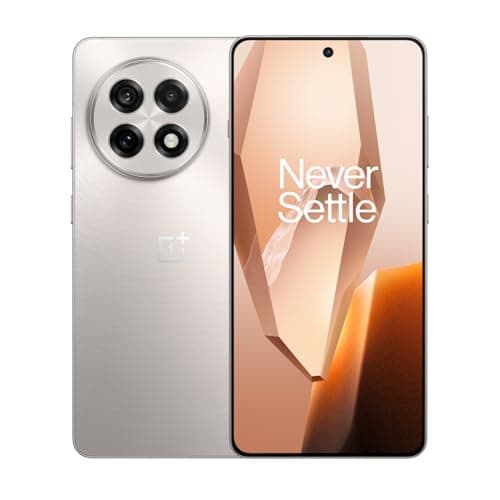
The OnePlus 15R is the highest-scoring phone in this entire roundup, and it earns that spot with the latest Snapdragon 8 Gen 5 chip and a massive 7,400mAh battery. The Snapdragon 8 Gen 5 is the most powerful mobile processor available — it handles every game at max settings, powers on-device AI features, and does it all while staying cooler than the Gen 3 in the 13R. The 7,400mAh battery is the largest in any flagship phone in India — you'll regularly go 1.5 to 2 days between charges. 100W SUPERVOOC charging brings you from 0 to 100% in about 35 minutes. The camera system with a 50MP telephoto provides real optical zoom. OxygenOS 15 remains the cleanest Android experience available. The trade-offs: no wireless charging (surprising at this price), the 8MP ultrawide is mediocre compared to Samsung and Pixel, and the camera processing still trails Pixel in computational photography. But for raw power, battery endurance, and charging speed, nothing under ₹50,000 comes close.
Pros
- +Snapdragon 8 Gen 5 — most powerful chip in any phone under ₹50K
- +7,400mAh battery — genuine 2-day flagship battery life
- +100W charging — 0 to 100% in ~35 minutes
- +OxygenOS 15 — clean, smooth, bloatware-free
- +50MP telephoto for real optical zoom
- +Lifetime Display Warranty included
Cons
- -No wireless charging — surprising at ₹48K
- -Camera processing trails Pixel 9a in low light
- -8MP ultrawide is mediocre for the price
- -Slightly heavy at 215g
- -IP65 (splash-proof) — not full IP68 submersion
Score Breakdown
The most powerful phone under ₹50,000. Snapdragon 8 Gen 5, 7,400mAh battery, and 100W charging — nothing else combines top-tier performance with this kind of endurance. The best Android phone in India if your budget allows.
Comparison Table
| Spec | Redmi A4 | Samsung M06 | iQOO Z10 Lite | Samsung M17 | Moto G57 | Redmi Note 14 | iQOO Z10 | Samsung M56 | OnePlus CE5 | OnePlus 13R | Galaxy S24 | Pixel 9a | OnePlus 15R |
|---|---|---|---|---|---|---|---|---|---|---|---|---|---|
| Price | ₹12,999 | ₹9,999 | ₹9,998 | ₹12,499 | ₹13,999 | ₹26,999 | ₹21,999 | ₹24,999 | ₹21,998 | ₹37,999 | ₹39,999 | ₹41,800 | ₹47,999 |
| Tier | Budget | Budget | Budget | Mid | Mid | Mid | Upper Mid | Upper Mid | Upper Mid | Flagship | Flagship | Flagship | Flagship |
| Processor | SD 4s Gen 2 | Dimensity 6300 | Dimensity 6300 | Exynos 1330 | SD 6s Gen 4 | Dimensity 7025 | SD 7s Gen 3 | Exynos 1480 | Dimensity 7400 | SD 8 Gen 3 | Exynos 2400 | Tensor G4 | SD 8 Gen 5 |
| RAM | 6GB | 4GB | 4GB | 6GB | 8GB | 6GB | 8GB | 8GB | 8GB | 12GB | 8GB | 8GB | 12GB |
| Display | 6.88" HD+ 120Hz | 6.5" HD+ | 6.72" HD+ 90Hz | 6.7" AMOLED 90Hz | 6.72" LCD 120Hz | 6.67" AMOLED 120Hz | 6.77" AMOLED 120Hz | 6.7" AMOLED+ 120Hz | 6.77" AMOLED 120Hz | 6.78" 1.5K 120Hz | 6.2" AMOLED 120Hz | 6.3" OLED 120Hz | 6.78" 1.5K 120Hz |
| Battery | 5,160mAh | 5,000mAh | 6,000mAh | 5,000mAh | 7,000mAh | 5,110mAh | 7,300mAh | 5,000mAh | 7,100mAh | 6,000mAh | 4,000mAh | 5,100mAh | 7,400mAh |
| Charging | 18W | 25W | 15W | 25W | 33W | 45W | 44W | 45W | 67W | 80W | 25W | 18W | 100W |
| Camera | 50MP | 50MP | 50MP | 50MP OIS | 50MP LYT-600 | 50MP OIS | 50MP OIS | 50MP OIS | 50MP OIS | 50MP + 50MP 2x | 50MP + 10MP 3x | 48MP | 50MP + 50MP 2x |
| IP Rating | None | None | None | IP54 | IP64 | IP64 | None | IP67 | None | None | IP68 | IP67 | IP65 |
| Updates | — | 4 years | — | 6 years | — | — | 2 years | 4 years | 3 years | 3 years | 7 years | 7 years | — |
| Score | 8.0 | 7.6 | 7.4 | 7.8 | 8.0 | 7.9 | 8.6 | 8.4 | 8.3 | 8.4 | 8.2 | 8.5 | 8.7 |
How We Score
| Criterion | Weight | Based On |
|---|---|---|
| Performance | 25% | Processor benchmark scores, real-world app loading speed, gaming performance (BGMI, Genshin Impact), multitasking with RAM management, and sustained performance under load |
| Display | 20% | Panel type (AMOLED vs LCD), resolution (FHD+ vs HD+), refresh rate (120Hz vs 90Hz), brightness, colour accuracy, and outdoor visibility |
| Camera | 20% | Daylight photo quality, low-light performance, video stabilisation, selfie camera quality, and overall versatility across shooting conditions |
| Battery | 20% | Battery capacity, real-world screen-on time, charging speed (watts), time to full charge, and battery health over time |
| Value | 15% | Price relative to specs, discount from MRP, software update longevity, brand service network, and resale value |
Scores are on a 0-10 scale. Performance is weighted highest because a slow phone ruins every other feature. Display and camera are equally weighted — both are daily-use experiences. Battery is critical in India where power cuts and long commutes are common.
Need Help Choosing?
Not sure which one is right for you? Our buying guide breaks down the key factors.
Read the Buying Guide →→Frequently Asked Questions
The Redmi A4 5G (₹12,999) — it has the fastest processor (Snapdragon 4s Gen 2), most RAM (6GB), and largest display (6.88-inch 120Hz) under ₹10K. The only caveat: 5G works only on Jio, not Airtel. If you're on Airtel, go with the Samsung Galaxy M06 5G.
Depends on your priority. Samsung Galaxy M17 5G (₹12,499) for the longest software support (6 years). Moto G57 Power 5G (₹13,999) for the biggest battery (7000mAh) and cleanest Android. Redmi Note 14 5G (₹26,999) for the best display (2100 nits AMOLED) and camera (Sony LYT 600 OIS).
The iQOO Z10 5G (₹21,999) is the best overall — fastest processor (Snapdragon 7s Gen 3), biggest battery (7300mAh), and great value. If you want the best build quality and water resistance, the Samsung Galaxy M56 5G (₹24,999) with IP67 is the pick. For the cleanest software, the OnePlus Nord CE5 (₹21,998) with OxygenOS is unmatched.
The OnePlus 15R (₹47,999) is the most powerful — Snapdragon 8 Gen 5 and 7400mAh battery. The Google Pixel 9a (₹41,800) takes the best photos and has the purest Android. The OnePlus 13R (₹37,999) is the best value — flagship Snapdragon 8 Gen 3 at the lowest price. The Samsung Galaxy S24 (₹39,999) is the best compact option with Galaxy AI and 7-year updates.
For gaming and raw power: Snapdragon wins at every price tier. Snapdragon 8 Gen 5 (OnePlus 15R) is the fastest overall, and Snapdragon 7s Gen 3 (iQOO Z10) is the fastest under ₹25K. For AI features: Google Tensor G4 (Pixel 9a) is purpose-built for AI processing. For battery efficiency: Dimensity chips (7025, 7400) are slightly better at sipping power. Exynos (Samsung) is the weakest performer but comes with Samsung's ecosystem advantages.
If you keep phones for 3+ years, yes. Samsung's 7-year update promise (Galaxy S24) and 6-year promise (Galaxy M17) are the longest in the industry. A Galaxy S24 bought in 2026 will get updates until 2033. Google Pixel 9a also offers 7 years. OnePlus and Xiaomi offer 3 years at most. Long-term updates mean better security, new features, and higher resale value.