Best Gaming Mice in India (2026)
Best gaming mice from ₹499 to ₹12,995 — ranked on sensor, build, weight, and value. 11 picks across budget, mid-range, premium, and ultra-premium tiers for every type of gamer.
Last updated: 8 May 2026
Your gaming mouse matters more than your keyboard — it's the input device that directly controls your aim, cursor speed, and in-game movements. A good sensor, comfortable shape, and the right weight can genuinely improve your gameplay. A bad mouse with sensor jitter or an uncomfortable grip will hold you back regardless of your skill. Complement your mouse with the right peripherals — a mechanical gaming keyboard with hot-swap switches, a low-friction gaming mousepad for consistent tracking, or a game controller for titles that play better with analog sticks.
ProductHunter.in evaluated 24 gaming mice across four price tiers: budget (under ₹1,000), mid-range (₹1,000–₹4,000), premium (₹4,000–₹13,000), and ultra-premium (₹13,000+). Budget gets you solid 1000Hz sensors for casual gaming. Mid-range introduces brand-name sensors (Razer, Logitech), premium switches, and ultralight designs. Premium delivers tournament-grade wireless, the latest sensor tech, and 60-80g weights that competitive players demand. Ultra-premium pushes the boundaries with 8K Hz native polling, sub-55g weights, and the absolute best sensors available.
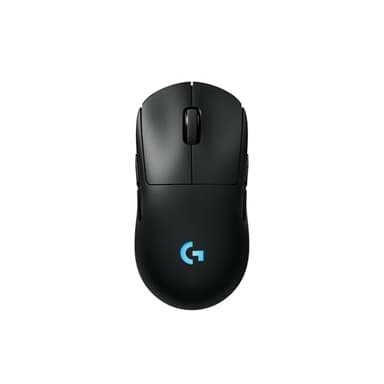
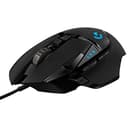
Logitech G PRO 2 Lightspeed
The esports standard. HERO 2 sensor (32K DPI), 8000Hz polling rate, LIGHTFORCE hybrid switches, 95-hour battery, and 60g weight. Used by more pro players than any other mouse. If you compete seriously, this is it.
Check Price on AmazonAt a Glance
This article contains affiliate links. We may earn a small commission at no cost to you. Learn more
HyperX Pulsefire Haste 2 Core
Best Lightweight₹2,490
Razer Viper V3 HyperSpeed
Best Battery₹2,995
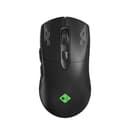
EvoFox Blaze 2 Tri-Mode
Best Budget Wireless₹1,379
Cosmic Byte Raptor
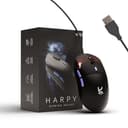
Best Budget Dual-Mode₹799
Razer Viper V3 Pro
Best Lightweight Pro₹12,995
Razer DeathAdder V3 Pro
Best Ergonomic Pro₹7,995
Budget Picks (Under ₹1,000)
Gaming mice under ₹1,000 have gotten surprisingly good in 2025-2026. You're getting 1000Hz polling rates, named sensors (PixArt, PAW3327), and even wireless connectivity — features that cost ₹3,000+ three years ago. They won't match a Razer or Logitech on build quality or sensor precision, but for casual competitive gaming (Valorant, CS2 at Gold-Platinum ranks), they're more than enough.
daWg Slay 25 Gaming Mouse
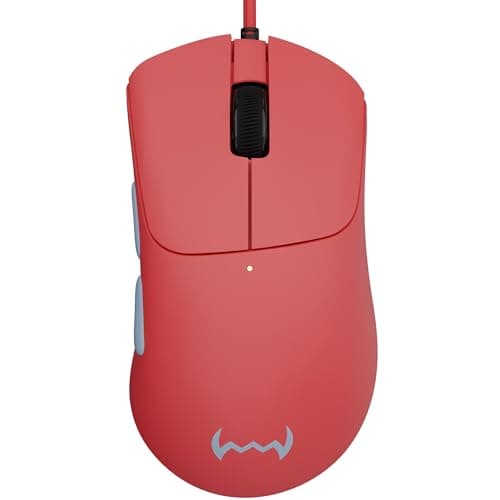
The daWg Slay 25 has the best sensor in the budget tier — the PixArt PAW3327 is a proven, well-documented gaming sensor used in mice costing 3x more. At 12,400 DPI with 1000Hz polling, the tracking is accurate and responsive enough for competitive FPS. The Huano switches are a solid choice — more tactile and durable than the no-name switches in cheaper mice. The red braided cable looks good and resists tangling. daWg is a new Indian brand, but the 5.0-star Amazon rating across 185 reviews suggests they're getting it right. The customization software lets you remap buttons and set DPI stages.
Pros
- +PAW3327 sensor — proven, accurate, no jitter
- +Huano switches — tactile, rated for high durability
- +1000Hz polling rate — responsive for competitive gaming
- +Customization software for DPI stages and button remapping
- +Perfect 5.0 Amazon rating with 185+ reviews
- +Braided cable resists tangling
Cons
- -daWg is a new brand — limited track record
- -No PTFE feet — stock feet are basic
- -Limited stock availability on Amazon
- -Only red color option available
Score Breakdown
The best sensor you can get under ₹1,000. If you play competitive FPS and want accurate tracking without spending ₹3K on a Razer, the PAW3327 delivers.
Cosmic Byte Raptor Dual Mode Gaming Mouse
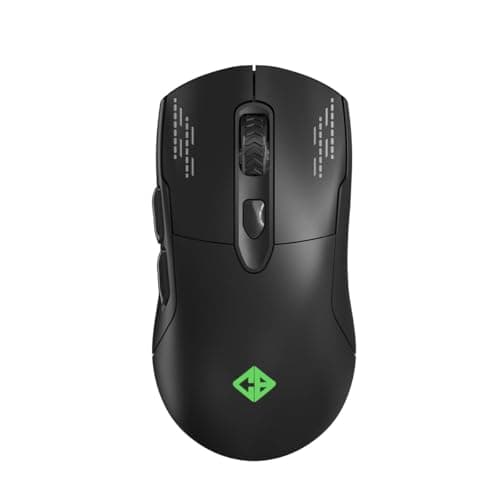
The Cosmic Byte Raptor is the only dual-mode (wired + wireless) gaming mouse under ₹1,000 with a named PixArt sensor. Plug in the USB cable for zero-latency wired gaming, or switch to 2.4GHz wireless for a clean desk setup. The PTFE feet are a premium touch at this price — they glide noticeably smoother than the standard plastic feet on competing budget mice. The trade-off: the 500Hz polling rate is half of what the daWg and Kreo offer, and the 4,800 DPI sensor is less precise for high-DPI gameplay. But if you value wireless flexibility and smooth gliding, this is unbeatable under ₹1,000.
Pros
- +Only dual-mode mouse under ₹1,000 — wired + wireless
- +PixArt 3212 sensor — named, documented, reliable
- +PTFE feet — smoother glide than any budget competitor
- +Cosmic Byte is an established Indian gaming brand
- +10M rated switches for longevity
- +11 RGB lighting effects
Cons
- -500Hz polling rate — half the competition
- -4,800 DPI max — lowest sensor resolution in this roundup
- -Wireless latency not suited for competitive FPS
- -Heavier than wired-only options due to wireless hardware
Score Breakdown
Buy this for the wireless option. If you game casually and want a clean desk without cables, the dual-mode at ₹799 is a steal. Competitive FPS players should stick with the wired daWg.
Kreo Harpy Ultralight Gaming Mouse
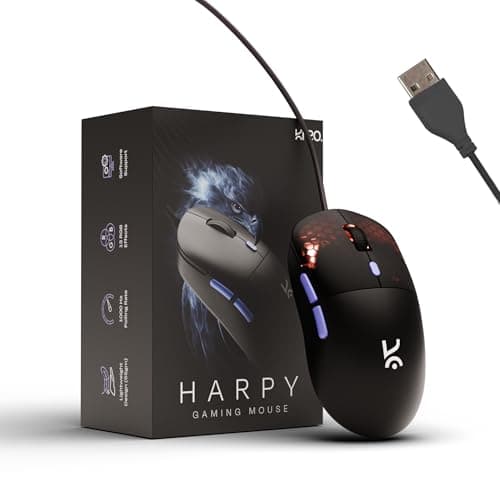
At ₹499, the Kreo Harpy is absurdly cheap for what it offers. 55 grams — that's lighter than the ₹12,495 Logitech G PRO 2 (60g). The 1000Hz polling rate matches mice costing 5x more. The 12,800 DPI sensor, while not a named brand, tracks well enough for casual gaming. The symmetrical design works for both left and right-handed players. 13 RGB modes are a nice touch at this price. The catch: the unknown sensor brand means tracking precision won't match a PAW3327 or Razer sensor at high speeds, and the honeycomb-style shell will collect dust. But at ₹499, you're not buying precision — you're buying a surprisingly capable entry point.
Pros
- +55g ultralight — lighter than mice costing 20x more
- +1000Hz polling rate at ₹499 is remarkable
- +12,800 DPI sensor with adjustable stages
- +Symmetrical — works for left-handed gamers too
- +13 RGB lighting modes
- +Cheapest gaming mouse in this roundup
Cons
- -No named sensor brand — precision unknown at high speeds
- -Honeycomb design collects dust inside the shell
- -Symmetrical shape less comfortable than ergonomic contoured mice
- -Unknown long-term durability and switch quality
Score Breakdown
The cheapest way to get 1000Hz polling and ultralight weight. If you're budget-constrained and want to try competitive gaming, ₹599 is a risk-free entry point.
Mid-Range Picks (₹1,000–₹4,000)
Mid-range is where gaming mice get serious. You're paying for brand-name sensors (Razer Focus X, Logitech HERO 25K), premium switches rated for 50-90 million clicks, and build quality that survives rage-slamming. This tier covers everything from budget wireless gaming to the iconic G502 — arguably the most popular gaming mouse ever made.
Logitech G502 Hero High Performance Wired Gaming Mouse
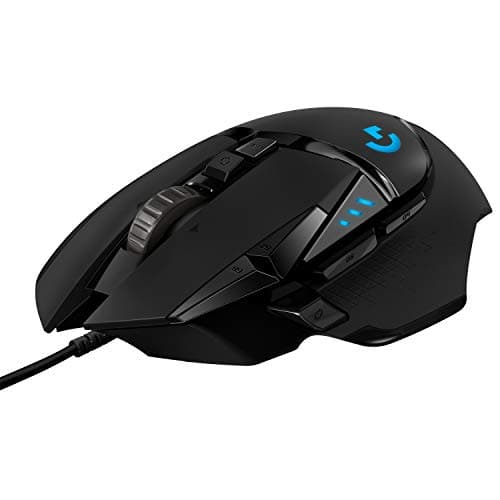
The G502 has been the world's best-selling gaming mouse for years, and the Hero version with Logitech's 25K sensor is the definitive edition. The HERO 25K sensor tracks on glass — literally zero smoothing, zero acceleration, perfect 1:1 tracking. 11 programmable buttons make this the best mouse for MMOs, MOBAs, and productivity power users. The adjustable weight system (5 removable 3.6g weights) lets you dial in your preferred heft. The downside: at 121g base weight, this is the heaviest mouse on this list by a wide margin. FPS players who need to flick quickly will find it sluggish. But for everything else — RPGs, strategy games, content creation — the G502 is unmatched.
Pros
- +HERO 25K sensor — zero smoothing, tracks on any surface
- +11 programmable buttons — best for MMOs and productivity
- +Adjustable weight system — tune the feel to your preference
- +Mechanical spring button tensioning — crisp, consistent clicks
- +5 onboard memory profiles — use on any PC without software
- +Iconic ergonomic shape — comfortable for hours
Cons
- -Heaviest mouse on this list at 121g
- -Not suitable for competitive FPS — too heavy for flick shots
- -Large footprint won't suit small hands
- -G HUB software required for full customization
- -Older design (2018) — lacks USB-C and modern features
Score Breakdown
The best all-round gaming mouse if weight isn't a concern. 11 buttons, adjustable weights, and the HERO 25K sensor make it the Swiss Army knife of mice. FPS players should look at the Razer Cobra instead.
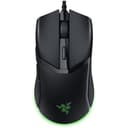
Razer Cobra Wired Gaming Mouse
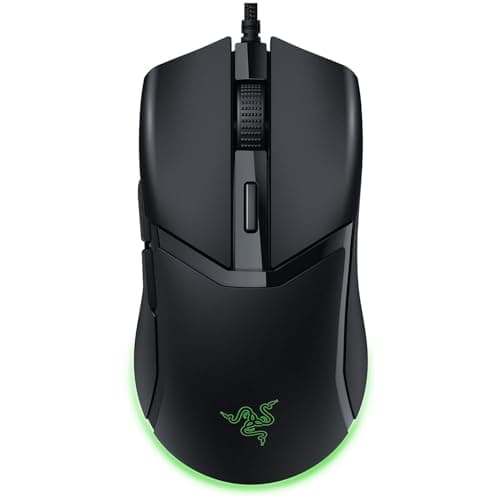
The Razer Cobra is the FPS player's mid-range pick. At 58g, it's lighter than mice costing twice as much, and the Gen-3 Razer Optical switches actuate via light beam instead of metal contact — meaning zero debounce delay and a rated lifespan of 90 million clicks. That's 3x the durability of standard mechanical switches. The Chroma RGB is the best-looking lighting system in this roundup. The Focus X sensor at 8500 DPI is more than enough for competitive play (most pros play at 400-1600 DPI anyway). The symmetrical design works for both hands but lacks the contoured comfort of the G502 for long sessions.
Pros
- +58g ultralight — among the lightest wired mice available
- +Gen-3 Optical switches — zero debounce, 90M click lifespan
- +Razer Chroma RGB — best lighting in this roundup
- +Affordable Razer entry at ₹2,595
- +Symmetrical — works for left-handed gamers
- +6 programmable buttons for essential binds
Cons
- -8500 DPI sensor is entry-level by Razer standards
- -Small form factor may not suit large hands
- -Only 6 buttons — not enough for MMOs
- -Wired only — no wireless option at this price
Score Breakdown
The best wired FPS mouse under ₹3,000. The 58g weight and optical switches give you a genuine competitive edge. Upgrade from this only when you need wireless.
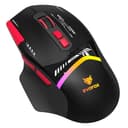
EvoFox Blaze 2 Tri-Mode Wireless Gaming Mouse
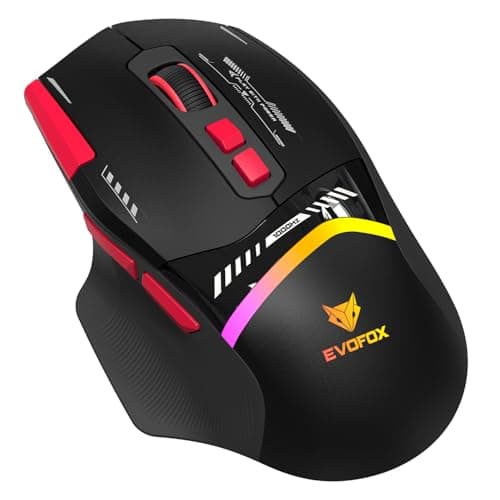
The EvoFox Blaze 2 is the cheapest tri-mode wireless gaming mouse on this list — 2.4GHz for gaming, Bluetooth for laptop work, and Type-C wired for zero-latency play. At ₹1,379, you're getting connectivity options that Razer and Logitech charge ₹5,000+ for. The 1000Hz polling rate over 2.4GHz means wireless latency is low enough for casual competitive play. Type-C charging is a modern touch — no hunting for micro-USB cables. The sensor isn't a named brand, so don't expect PAW3327-level precision, but for Valorant and Apex at mid-ranks, it's plenty. EvoFox is an Indian brand gaining traction in budget gaming.
Pros
- +Tri-mode wireless at ₹1,379 — cheapest on this list
- +1000Hz polling over 2.4GHz — low wireless latency
- +Type-C fast charging — modern and convenient
- +12,800 DPI — highest in the budget-mid tier
- +Bluetooth mode for productivity use
- +Indian brand with growing community
Cons
- -No named sensor brand — precision ceiling unknown
- -EvoFox software needs improvement
- -Long-term reliability unproven
- -May not suit all grip styles
- -Wireless latency still won't match HyperX or Razer at 2ms
Score Breakdown
The entry ticket to wireless gaming. If you want cable-free play without spending ₹5K, the tri-mode connectivity and Type-C charging make this the best value wireless mouse available.
Premium Picks (₹4,000+)
Premium gaming mice are built for one thing: winning. Sub-2ms wireless latency, 60-80g weights, 25K+ DPI sensors, and battery life measured in days. If you play competitive FPS at high ranks (Immortal/Radiant in Valorant, Global in CS2), the difference between a ₹1,000 mouse and a ₹5,000+ mouse is measurable in aim consistency. If you're casual, save your money — mid-range is plenty.
Logitech G PRO 2 Lightspeed Wireless Gaming Mouse
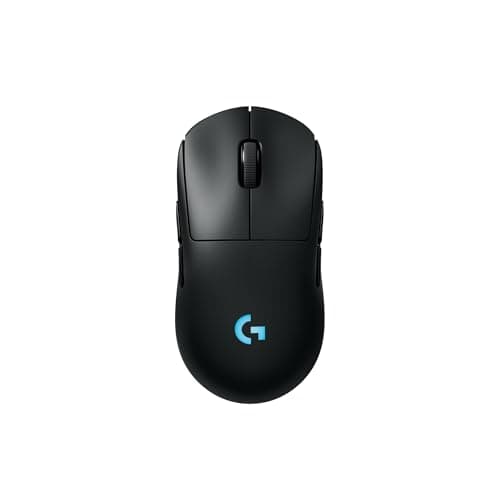
The Logitech G PRO 2 is the mouse most esports professionals use — and the spec sheet explains why. The HERO 2 sensor with 32K DPI and zero smoothing provides the most accurate tracking available. The LIGHTFORCE hybrid switches combine optical actuation speed with mechanical click feel — the best of both worlds. 8,000Hz polling rate (8x the standard 1000Hz) means the mouse reports its position 8,000 times per second — you literally can't move faster than the mouse can track. At 60g with 95-hour battery life and USB-C charging, there are no compromises. It's expensive at ₹9,999, but if you play competitively, this is the endgame.
Pros
- +HERO 2 sensor — most accurate available, zero smoothing
- +8,000Hz polling rate — 8x the standard, tournament-grade
- +LIGHTFORCE hybrid switches — optical speed + mechanical feel
- +60g weight — competitive ultralight without holes
- +95-hour battery life on Lightspeed wireless
- +Used by more esports pros than any other mouse
Cons
- -₹12,495 is 2-3x the next option
- -No RGB lighting — weight savings priority
- -Ambidextrous shape less comfortable than contoured mice
- -Minimal side buttons — only 2 per side
- -G HUB software required for 8000Hz polling
Score Breakdown
The best gaming mouse money can buy. If you compete at high ranks and want zero compromises on sensor, wireless, weight, and battery — this is the endgame mouse.
HyperX Pulsefire Haste 2 Core Wireless Gaming Mouse
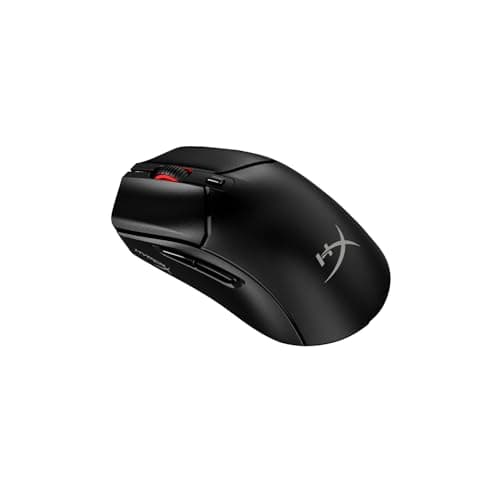
The HyperX Pulsefire Haste 2 Core is the best value in premium wireless gaming mice. At 61g, it's essentially the same weight as the ₹12,495 Logitech G PRO 2 — but costs ₹8,000 less. The 26K sensor is excellent (HyperX sensors are made by PixArt), and the 2ms wireless report rate delivers near-zero latency. 100-hour battery means charging once a month. TTC Golden Micro switches are crisp and satisfying. The included USB-C cable lets you play wired when the battery dies. Where it falls behind the G PRO 2: no 8000Hz polling (standard 1000Hz), and the shell material feels slightly cheaper. But for 64% less money? Outstanding.
Pros
- +61g — same weight class as the ₹12K Logitech G PRO 2
- +100-hour battery life — charge once a month
- +2.4GHz wireless with 2ms report rate
- +TTC Golden switches — crisp, tactile, durable
- +₹8,000 cheaper than the G PRO 2 for similar weight
- +USB-C cable included for wired play
Cons
- -No RGB lighting — clean look but no customization
- -Standard 1000Hz polling (not 8000Hz like G PRO 2)
- -Ambidextrous shape may feel bland vs ergonomic mice
- -Limited button count — 6 buttons total
Score Breakdown
The smart money pick. 90% of the G PRO 2 experience at 36% of the price. Unless you need 8000Hz polling for tournament play, this does everything a competitive player needs.
Razer Viper V3 HyperSpeed Wireless Esports Gaming Mouse
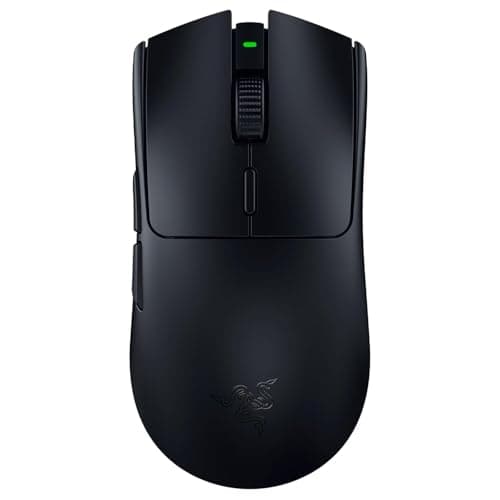
The Razer Viper V3 HyperSpeed has one jaw-dropping spec: 280-hour battery life. That's nearly 3 months of daily 3-hour gaming sessions without charging. If you hate charging mice (or forgetting to charge before a session), nothing else compares. The 30K DPI Razer sensor is accurate and reliable, and HyperSpeed wireless is Razer's proven low-latency tech used in tournaments. At 82g it's heavier than the HyperX (61g) and Logitech (60g), but still light enough for competitive play. 8 programmable buttons give it more versatility than the minimal-button competition.
Pros
- +280-hour battery — charge once every 2-3 months
- +30K DPI Razer sensor — accurate, proven technology
- +HyperSpeed wireless — tournament-grade low latency
- +8 programmable buttons — most in the premium tier
- +Ambidextrous design for all players
- +₹2,995 with Razer build quality
Cons
- -82g — heavier than HyperX (61g) and Logitech (60g)
- -No RGB lighting
- -Gen-2 switches — not the latest Gen-3 optical
- -Ambidextrous shape less comfortable than ergonomic designs
- -No tilt scroll wheel
Score Breakdown
The set-and-forget wireless mouse. If you value battery life above all else — no charging cables, no docks, no interruptions — the 280-hour Viper V3 is unmatched.
Ultra-Premium Picks (₹13,000+)
Ultra-premium gaming mice are what esports pros actually compete with. These are the lightest, most precise wireless mice money can buy — 54-63g weights, 30K+ DPI sensors with zero smoothing, 8K Hz native polling, and Gen-3 optical switches. If you're competing at the highest level in Valorant, CS2, or Apex Legends, this is the tier where hardware stops being a bottleneck.
Razer Viper V3 Pro Wireless Gaming Mouse
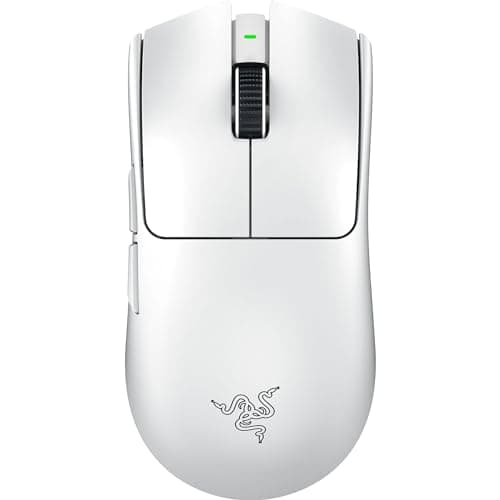
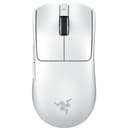
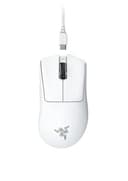
The Razer Viper V3 Pro is the lightest pro-grade wireless mouse you can buy — 54g is lighter than the Logitech G PRO 2 (60g) by a meaningful margin. At this weight, the mouse essentially disappears in your hand during fast aim movements. The Focus Pro Gen-2 sensor at 35K DPI with zero smoothing and zero acceleration delivers tracking that's imperceptible from perfect. The killer feature is 8K Hz native wireless polling — the mouse reports its position 8,000 times per second wirelessly, matching the G PRO 2's wired-only 8K mode. Gen-3 optical switches actuate via light beam for zero debounce delay. The updated ergonomic shape is more comfortable than the V2 while maintaining the symmetrical design. 95-hour battery life means weekly charging at most.
Pros
- +54g — lightest pro wireless mouse available
- +8K Hz native wireless polling — no dongle needed
- +Focus Pro Gen-2 35K DPI — best Razer sensor to date
- +Gen-3 optical switches — zero debounce, 90M clicks
- +95-hour battery with USB-C charging
- +Updated ergonomic shape from V2
Cons
- -₹13,999 is a significant investment
- -No RGB lighting — weight savings priority
- -Symmetrical shape less comfortable than DeathAdder for palm grip
- -Requires HyperPolling dongle for 8K Hz on older PCs
Score Breakdown
The ultimate competitive FPS mouse. 54g with 8K Hz native wireless and the Focus Pro Gen-2 sensor — if you need every possible advantage in tournament play, this is it.
Razer DeathAdder V3 Pro Wireless Gaming Mouse
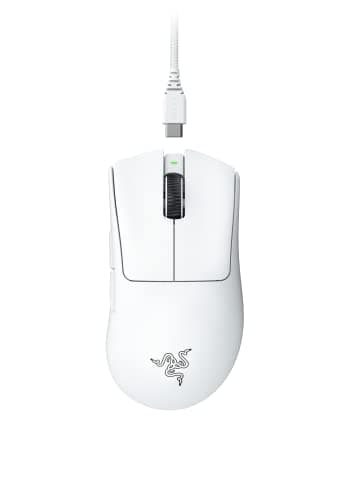
The Razer DeathAdder V3 Pro takes the most beloved ergonomic mouse shape in gaming history and makes it wireless and ultralight. At 63g, it's the lightest ergonomic pro mouse available — the contoured right-hand shape that millions of gamers swear by, without the weight penalty. The Focus Pro sensor at 30K DPI is proven tournament-grade tech. HyperSpeed wireless delivers sub-1ms latency. Gen-3 optical switches give you zero debounce actuation. If you've ever used a DeathAdder and loved the shape but wanted wireless and lightweight — this is exactly that. The trade-off vs the Viper V3 Pro: 9g heavier, no 8K Hz native polling, and right-hand only. But for palm-grip players who prioritise comfort over absolute minimum weight, the DeathAdder shape is unmatched.
Pros
- +Iconic DeathAdder ergonomic shape — most comfortable pro mouse
- +63g — lightest ergonomic wireless mouse available
- +Focus Pro 30K DPI — proven tournament-grade sensor
- +Gen-3 optical switches — zero debounce, 90M clicks
- +HyperSpeed wireless with sub-1ms latency
- +90-hour battery life
Cons
- -Right-hand only — no left-hand or ambidextrous option
- -No 8K Hz native polling (standard 1000Hz)
- -63g heavier than Viper V3 Pro's 54g
- -₹13,999 for a mouse without 8K Hz is harder to justify vs Viper
Score Breakdown
The best mouse for palm-grip competitive players. The DeathAdder shape at 63g wireless is a dream — choose this over the Viper V3 Pro if comfort matters more than absolute minimum weight.
Comparison Table
| Spec | Viper V3 Pro | DeathAdder V3 Pro | G PRO 2 | Haste 2 Core | Viper V3 HS | G502 Hero | Razer Cobra | EvoFox Blaze 2 | daWg Slay 25 | Cosmic Byte | Kreo Harpy |
|---|---|---|---|---|---|---|---|---|---|---|---|
| Price | ₹13,999 | ₹13,999 | ₹12,495 | ₹4,499 | ₹2,995 | ₹3,995 | ₹2,999 | ₹1,799 | ₹999 | ₹825 | ₹599 |
| Tier | Ultra-Premium | Ultra-Premium | Premium | Premium | Premium | Mid | Mid | Mid | Budget | Budget | Budget |
| Sensor | Focus Pro Gen-2 35K | Focus Pro 30K | HERO 2 32K | HyperX 26K | Razer 30K | HERO 25K | Focus X 8.5K | 12.8K | PAW3327 | PixArt 3212 | 12.8K |
| Weight | 54g | 63g | 60g | 61g | 82g | 121g | 58g | — | — | — | 55g |
| Wireless | HyperSpeed 8K | HyperSpeed | Lightspeed | 2.4GHz | HyperSpeed | ❌ Wired | ❌ Wired | Tri-Mode | ❌ Wired | Dual-Mode | ❌ Wired |
| Polling | 8000Hz | 1000Hz | 8000Hz | 1000Hz | 1000Hz | 1000Hz | 1000Hz | 1000Hz | 1000Hz | 500Hz | 1000Hz |
| Battery | 95hr | 90hr | 95hr | 100hr | 280hr | — | — | — | — | — | — |
| Buttons | 6 | 5 | 5+2 | 6 | 8 | 11 | 6 | 6 | 6 | 6 | 6 |
| RGB | ❌ | ❌ | ❌ | ❌ | ❌ | ✅ | ✅ Chroma | ✅ | ❌ | ✅ | ✅ |
| Score | 8.8 | 8.6 | 9.0 | 8.6 | 8.4 | 8.3 | 8.2 | 8.0 | 7.8 | 7.6 | 7.4 |
How We Score
| Criterion | Weight | Based On |
|---|---|---|
| Sensor | 30% | DPI range, tracking accuracy, zero smoothing/acceleration, polling rate, surface compatibility |
| Build | 20% | Shell material, switch quality and rated lifespan, cable quality, feet material, overall durability |
| Weight | 20% | Total weight in grams, weight distribution, balance, impact on aim and fatigue during long sessions |
| Features | 15% | Programmable buttons, onboard profiles, RGB, wireless modes, software quality, battery life |
| Value | 15% | Price relative to sensor and build quality, discount from MRP, competitive pricing vs alternatives |
Scores are on a 0–10 scale. Sensor quality is weighted highest because it directly determines tracking accuracy — the core function of a gaming mouse. Weight gets high priority because lighter mice demonstrably improve aim in FPS games.
Need Help Choosing?
Not sure which one is right for you? Our buying guide breaks down the key factors.
Read the Buying Guide →→Frequently Asked Questions
Yes — in FPS games specifically. A lighter mouse (55-65g) requires less force to move and stop, which means faster flick shots and less arm fatigue over long sessions. Pro Valorant and CS2 players overwhelmingly use mice under 80g. For MMOs, MOBAs, and strategy games, weight matters less — the heavier G502 (121g) is preferred by many because its heft provides stability and precision for slower, deliberate movements.
No — not with modern wireless. The Logitech Lightspeed (1ms), HyperX 2.4GHz (2ms), and Razer HyperSpeed (sub-2ms) are all faster than the 8ms+ of a typical USB wired connection. Wireless latency stopped being a competitive disadvantage around 2022. The only exception: budget wireless mice (₹800-1,500 range) using basic 2.4GHz chips may add 5-10ms latency, which is noticeable in competitive play.
Most competitive FPS players use 400-1600 DPI — far lower than the 25,000+ DPI sensors advertise. Higher DPI isn't better; it just means smaller physical movements translate to larger cursor movements. Low DPI (400-800) gives you more precision for aiming. High DPI (1600+) is useful for high-resolution monitors (4K) and productivity. The sensor's maximum DPI matters less than its tracking accuracy at your preferred DPI.
The HyperX Pulsefire Haste 2 Core at ₹2,490 — you get 61g ultralight wireless with 100-hour battery and a 26K sensor. It's the best performance-per-rupee in this roundup. If you prefer wired with the most buttons, the Logitech G502 Hero at ₹3,595 is the iconic all-rounder. For FPS-focused wired play, the Razer Cobra at ₹2,595 offers 58g weight with optical switches.
Only if you compete at high ranks. The Razer Viper V3 Pro (54g, 8K Hz native wireless) and DeathAdder V3 Pro (63g, iconic ergonomic shape) are built for tournament play. The 8K Hz polling on the Viper V3 Pro provides measurably smoother cursor movement. For casual to mid-level competitive play, the G PRO 2 at ₹9,999 or HyperX Haste 2 Core at ₹2,490 deliver 90% of the performance at a lower price.