
Best Yoga Mats in India (2026)
Best yoga mats from ₹519 to ₹4,349 — ranked on grip, cushioning, material quality, and durability. 9 picks across budget, mid-range, and premium tiers.
A yoga mat needs two things: grip that holds during sweaty sessions, and cushioning that protects your knees and joints. Material determines both — TPE (thermoplastic elastomer) is the sweet spot for most practitioners, offering better grip and eco-friendliness than cheap EVA foam. Natural rubber and PU (polyurethane) are premium upgrades with superior wet grip.
We tested yoga mats across three price tiers: budget (under ₹1,000), mid-range (₹1,000–₹3,000), and premium (₹3,000–₹5,000). Budget mats in TPE are genuinely functional for daily practice. Mid-range adds premium materials, alignment markings, and better thickness options. Premium brings natural rubber, PU surfaces, and international brand quality for serious practitioners.
TEGO Stance with GuideAlign (₹2,589)
An Indian-designed yoga mat with alignment markings that guide hand and foot placement for correct postures. Premium grip that improves when wet, excellent 5mm cushioning, and durability that lasts years of daily practice. The best balance of grip, guidance, and price.
Check Price on AmazonIf you're also considering alternatives, see our Best Foam Rollers Recovery in India (2026).
Not sure what specs matter most? Our Home Gym Buying Guide India — Equipment for Every Budget breaks down the key factors. Also looking for foam rollers recovery? See our Best Foam Rollers Recovery in India (2026).
At a Glance
WiseLife PU Rubber Pro
Best Premium₹4,349

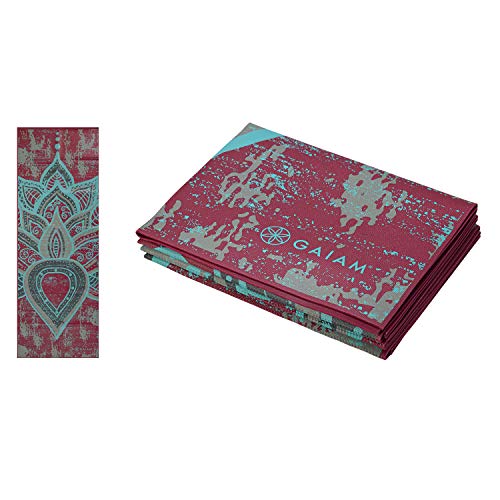
Gaiam Foldable Travel
Best Travel₹4,078
Budget Picks (Under ₹1,000)
Budget yoga mats have improved dramatically. TPE (thermoplastic elastomer) mats are now available under ₹1,000 — they grip better than EVA foam, are eco-friendlier, and last longer. At 6mm thickness, they provide adequate cushioning for daily practice on hard floors. The main sacrifice: longevity. Budget mats may start losing grip after 6-12 months of daily use.
WiseLife Dual TPE 6mm Yoga Mat
The WiseLife Dual TPE is the best budget yoga mat you can buy. The dual-layer construction gives you two different textures — a textured surface for grip during yoga and a smoother surface for floor exercises and stretching. Both sides are non-slip, which means the mat stays put on tile, marble, and wooden floors. TPE material provides significantly better grip than EVA foam, especially during sweaty sessions. At 6mm, cushioning is adequate for standing poses and floor work, though those with sensitive knees may want the 10mm version. Eco-friendly and free of PVC, latex, and heavy metals.
Pros
- +Dual-layer design — two textures for different workout types
- +TPE material — better grip than EVA foam
- +Non-slip on both surfaces — stays put on all floor types
- +Eco-friendly — no PVC, latex, or heavy metals
- +Carry strap included for easy transport
Cons
- -Highest price in budget tier at ₹946
- -6mm may be thin for sensitive knees on hard floors
- -May develop mild odour when new — airs out in 2-3 days
- -Grip may reduce after 8-12 months of intense daily use
Score Breakdown
The best yoga mat under ₹1,000. Dual-layer TPE at this price outperforms every EVA foam mat in grip and durability. The dual-texture design adds genuine versatility.
Lifelong TPE 6mm Yoga Mat
The Lifelong TPE 6mm delivers the essentials at ₹599 — TPE material (not cheap EVA) with anti-slip texturing that holds during sun salutations and warrior poses. Lifelong is a trusted Indian brand with good customer service, which matters if you get a defective mat (it happens at any price point). The moisture-resistant surface handles moderate sweat without losing grip. At 6mm, cushioning is standard — adequate for most yoga styles but not ideal for restorative or yin yoga where you hold floor positions for minutes. For a beginner starting daily practice, this is the most practical starting point.
Pros
- +TPE material at ₹599 — cheapest TPE mat in the roundup
- +Anti-slip texturing holds during standard yoga poses
- +Trusted Lifelong brand with customer service support
- +Moisture-resistant surface handles moderate sweat
- +Lightweight for easy carrying to classes
Cons
- -Basic texturing — not as grippy as WiseLife Dual
- -Standard dimensions may be short for taller practitioners
- -6mm cushioning feels thin on hard concrete floors
- -Limited colour options
Score Breakdown
The best starter yoga mat. TPE at ₹599 is remarkable value — most TPE mats start at ₹750+. If you are beginning yoga and want a mat that works without overthinking, this is it.
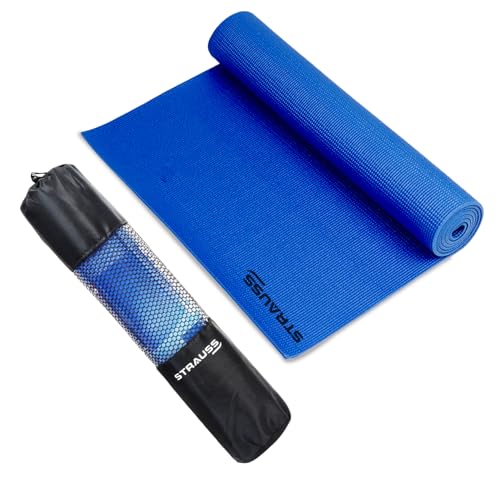
Strauss EVA 6mm Yoga Mat

The Strauss EVA 6mm is the cheapest yoga mat worth buying. EVA foam provides adequate cushioning for basic yoga and floor exercises — it will protect your knees during tabletop poses and your spine during shavasana. The textured surface offers reasonable grip for dry sessions, though it will struggle when you start sweating heavily (EVA's main limitation vs TPE). At ₹519, this is the gateway mat — buy it to start a yoga habit without financial commitment, then upgrade to TPE once you are practising regularly. Strauss is one of India's most popular fitness brands with wide availability on Amazon.
Pros
- +Cheapest yoga mat in the roundup at ₹519
- +6mm EVA provides adequate basic cushioning
- +Multiple colour options available
- +Strauss is widely available and well-known
- +Good enough to start a yoga habit
Cons
- -EVA foam loses grip when wet — struggles with sweaty sessions
- -Less durable than TPE — may degrade within 6 months of daily use
- -Not eco-friendly compared to TPE alternatives
- -Thinner feel compared to TPE mats at same thickness
Score Breakdown
The starter mat for absolute beginners. At ₹519, the risk is zero — try yoga for a month, and if you stick with it, upgrade to a TPE mat. Not recommended for daily practitioners.
Mid-Range Picks (₹1,000–₹3,000)
Mid-range mats are where yoga gets comfortable. You get premium TPE with better grip, thicker options (10mm) for joint protection, alignment markings for correct postures, and natural rubber options for eco-conscious practitioners. These mats handle daily practice for 1-2 years before needing replacement.
TEGO Stance Yoga Mat with GuideAlign

The TEGO Stance is designed in India for Indian conditions — and it shows. The GuideAlign markings are not decorative; they are functional alignment lines that show you exactly where to place your hands and feet for correct postures. This is invaluable for self-practice at home without an instructor. The grip improves when wet — the opposite of most mats — making it ideal for hot yoga, power yoga, and sweaty Vinyasa flows. The 5mm thickness strikes the perfect balance between cushioning and stability (thicker mats can make balance poses harder). Designed by Indian yoga practitioners who understand that most Indian homes have hard marble or tile floors.
Pros
- +GuideAlign markings teach correct hand and foot placement
- +Grip improves when wet — ideal for sweaty practices
- +Designed in India for Indian floor types and climate
- +5mm — optimal balance of cushion and stability
- +Durable enough for 1-2 years of daily practice
Cons
- -Higher price than basic TPE mats
- -5mm may feel thin for practitioners with knee issues
- -Alignment markings may not suit all yoga styles
- -Limited colour options compared to international brands
Score Breakdown
The best yoga mat for most Indian practitioners. The GuideAlign markings and wet-grip technology solve the two biggest problems in home yoga practice: incorrect postures and slipping during sweaty sessions.
IRIS Natural Rubber Eco Friendly Yoga Mat

The IRIS Natural Rubber mat is the most eco-friendly option in this roundup. Natural rubber is biodegradable, sustainably sourced, and provides a grip quality that synthetic materials struggle to match — especially when wet. Natural rubber's open-cell structure absorbs moisture and becomes grippier, making it naturally suited for hot yoga and sweaty practices. The premium feel is immediately noticeable — it is heavier and denser than TPE mats, which some practitioners prefer for the grounded, connected-to-the-floor sensation. The trade-off: natural rubber has a distinct smell when new (it fades in 1-2 weeks), and it is heavier to carry than TPE alternatives.
Pros
- +Natural rubber — biodegradable and eco-friendly
- +Excellent wet grip — natural property of rubber
- +Premium feel — dense and grounded
- +Durable — natural rubber outlasts TPE and EVA
- +Textured surface prevents slipping in all conditions
Cons
- -Natural rubber smell when new — fades in 1-2 weeks
- -Heavier than TPE mats — less portable
- -Higher price for the material quality
- -Not suitable for latex-allergic practitioners
Score Breakdown
The best eco-friendly yoga mat. If sustainability matters to you and you want a mat that grips better when wet, natural rubber is the material to choose. Avoid if you have latex allergies.
WiseLife TPE 10mm Yoga Mat
The WiseLife TPE 10mm is the thickest yoga mat in this roundup — and thickness matters more than most people think. On hard Indian floors (marble, tile, concrete), a 6mm mat compresses under knee pressure during tabletop, child's pose, and camel pose. The 10mm cushion eliminates that discomfort entirely. This is the mat for beginners who find floor poses painful, practitioners with existing knee or wrist issues, and anyone practising restorative or yin yoga where you hold floor positions for minutes. The TPE material maintains good grip despite the extra thickness. The trade-off: balance poses (tree, warrior III) are slightly harder on thicker mats because your feet sink into the cushion.
Pros
- +10mm — thickest mat, best joint protection available
- +Eliminates knee pain on hard floors — marble, tile, concrete
- +TPE material maintains grip despite thickness
- +Excellent for beginners, yin yoga, and restorative practice
- +Good value at ₹1,315 for the extra cushioning
Cons
- -Balance poses are harder on thick mats — feet sink in
- -Bulkier to carry than 6mm alternatives
- -May feel too soft for advanced practitioners who want ground contact
- -Takes slightly longer to air out new-mat smell
Score Breakdown
The best mat for joint protection. If knee pain or hard floors are stopping you from enjoying yoga, the 10mm cushion solves the problem immediately. Not ideal for advanced balance-focused practices.
Premium Picks (₹3,000–₹5,000)
Premium yoga mats are for committed practitioners who practice daily. PU (polyurethane) surfaces offer the best wet grip available — they are specifically engineered for hot yoga and intense Vinyasa flows. International brands like Gaiam bring decades of yoga-specific design expertise. These mats last 2-5 years of daily use.
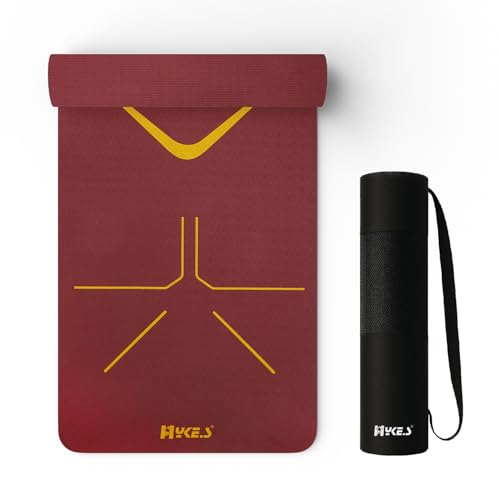
WiseLife Alignment PU Rubber Professional Yoga Mat
The WiseLife PU Rubber Professional is the highest-performance yoga mat in this roundup. The PU (polyurethane) top surface provides the best wet grip available in any mat material — it literally gets stickier as you sweat. The natural rubber base adds weight and stability, preventing the mat from sliding on any floor. Alignment markings guide posture placement like the TEGO Stance, but the PU surface grip is noticeably superior. This is the mat for hot yoga practitioners, power yoga enthusiasts, and anyone whose hands and feet slip during intense sessions. Professional-grade durability means 3-5 years of daily use.
Pros
- +PU surface — best wet grip of any yoga mat material
- +Natural rubber base for stability and durability
- +Alignment markings for correct posture guidance
- +Gets grippier as you sweat — ideal for hot yoga
- +Professional-grade longevity — 3-5 years of daily use
Cons
- -Highest price in the roundup at ₹4,349
- -Heavier than TPE mats — less portable
- -PU surface needs breaking in — grip improves after first few uses
- -Not suitable for latex-allergic users (natural rubber base)
Score Breakdown
The best yoga mat for sweaty practices. If you do hot yoga, power yoga, or Ashtanga, the PU surface wet grip is unmatched. The highest long-term value despite the premium price.
Gaiam Yoga Mat Classic Print

Gaiam is one of the world's most recognised yoga brands, and the Classic Print mat brings their signature aesthetic to Indian practitioners. The sticky PVC surface provides reliable grip during dry and moderate-sweat sessions — though it cannot match PU or natural rubber in heavy-sweat conditions. The 5mm thickness balances cushion and stability well. The real draw is the design — Gaiam's prints are iconic in yoga studios worldwide, and the visual quality is noticeably above anything from Indian brands. This is a lifestyle purchase as much as a functional one. International Gaiam quality means consistent manufacturing and durability.
Pros
- +Iconic Gaiam designs — premium aesthetic quality
- +Sticky PVC surface — reliable grip for standard practice
- +Trusted international brand with decades of yoga expertise
- +5mm optimal thickness for balance and cushion
- +Lightweight and portable for studio classes
Cons
- -PVC is not eco-friendly compared to TPE or natural rubber
- -Sticky surface can attract dust and lint
- -Grip reduces in heavy-sweat conditions
- -Premium pricing for PVC material
Score Breakdown
The best-looking yoga mat in the roundup. Pick this if mat aesthetics matter to you and you practice moderate-intensity yoga. For hot yoga or heavy sweating, the WiseLife PU Rubber is more functional.
Gaiam Foldable Travel Yoga Mat
The Gaiam Foldable Travel Mat solves a specific problem: practising yoga while travelling without carrying a full-size rolled mat. It folds flat into your suitcase or backpack — no more awkward mat tubes at airports. The 2mm thickness is intentionally thin for portability; it provides a clean, grippy surface between you and hotel room floors rather than thick cushioning. Use it over hotel carpets or on top of a towel for extra padding. The Gaiam sticky surface provides reliable grip for travel sessions. This is not your daily home mat — it is the mat that goes everywhere with you.
Pros
- +Foldable — fits flat in any suitcase or large backpack
- +Lightweight — barely adds to luggage weight
- +Gaiam quality surface and grip
- +Solves the travel yoga problem completely
- +Standard width for comfortable practice
Cons
- -2mm — minimal cushioning, not for daily home use
- -₹4,078 for a supplementary mat is premium
- -Needs a towel underneath on hard floors for comfort
- -Folds may leave creases that take time to flatten
Score Breakdown
The only real travel yoga mat option. If you travel frequently and maintain a yoga practice, this eliminates the rolled-mat-at-the-airport problem. Not a replacement for your home mat.
Comparison Table
| Feature | Strauss EVA | Lifelong TPE | WiseLife Dual TPE | WiseLife TPE 10mm | TEGO GuideAlign | IRIS Natural Rubber | Gaiam Classic | Gaiam Travel | WiseLife PU Pro |
|---|---|---|---|---|---|---|---|---|---|
| Price | ₹519 | ₹599 | ₹946 | ₹1,315 | ₹2,589 | ₹2,999 | ₹3,559 | ₹4,078 | ₹4,349 |
| Material | EVA Foam | TPE | Dual TPE | TPE | Premium | Natural Rubber | PVC | PVC | PU + Rubber |
| Thickness | 6mm | 6mm | 6mm | 10mm | 5mm | Standard | 5mm | 2mm | Standard |
| Wet Grip | Poor | Average | Good | Good | Excellent | Excellent | Average | Average | Best |
| Eco-Friendly | No | Yes | Yes | Yes | Yes | Yes | No | No | Yes |
| Alignment | No | No | No | No | Yes | No | No | No | Yes |
| Best For | Beginners | Daily starter | Versatile use | Joint issues | Home practice | Eco-conscious | Aesthetics | Travel | Hot yoga |
| Score | 8.5 | 8.6 | 8.8 | 9.0 | 9.2 | 9.0 | 8.8 | 8.7 | 9.1 |
How We Score
| Criterion | Weight | Based On |
|---|---|---|
| Grip | 30% | Surface traction during dry and wet conditions, slip resistance on both sides, and grip retention over time. |
| Cushion | 20% | Thickness, density, compression under body weight, joint protection on hard floors, and comfort during floor poses. |
| Material | 20% | Material type (EVA, TPE, PVC, natural rubber, PU), eco-friendliness, toxin-free certification, and odour levels. |
| Durability | 15% | Material longevity under daily use, colour retention, surface wear resistance, and structural integrity over months. |
| Value | 15% | Feature-to-price ratio, included accessories (straps, bags), brand reliability, and replacement availability. |
Also looking for premium yoga mats? See our Best Premium Yoga Mats in India (2026).
Need Help Choosing?
Frequently Asked Questions
EVA is cheapest but loses grip when wet and is least durable. TPE is the sweet spot — good grip, eco-friendly, affordable. Natural rubber has the best eco-credentials and excellent wet grip but is heavier and smells when new. PU (polyurethane) has the best wet grip of any material — essential for hot yoga. For most practitioners, TPE is the right choice. Upgrade to PU or natural rubber if you sweat heavily.
4-5mm is standard and works for most yoga styles — good balance of cushion and stability. 6mm adds comfort on hard floors (marble, tile) without sacrificing balance. 8-10mm is for practitioners with knee issues, those on concrete floors, or restorative/yin yoga. Avoid mats thicker than 6mm for balance-intensive practices (Ashtanga, standing poses) — your feet sink in and destabilise.
Yes, especially for home practice without an instructor. Alignment markings show you where to place hands and feet for correct postures — preventing injury from misalignment. The TEGO Stance and WiseLife PU Pro both include alignment lines. They are most valuable for beginners and intermediate practitioners building muscle memory.
Wipe with a damp cloth after each session. Deep clean weekly with a mix of water and mild soap or a few drops of tea tree oil. Air dry completely before rolling — moisture trapped in a rolled mat breeds bacteria. Never machine wash. TPE and PU mats are easier to clean than EVA. Natural rubber mats should avoid direct sunlight during drying.
EVA mats: every 6-12 months of regular use. TPE mats: every 1-2 years. Natural rubber and PU mats: every 2-5 years. Signs you need a new mat: visible wear on the surface, reduced grip (especially when wet), thinning or compressed areas, or flaking material.